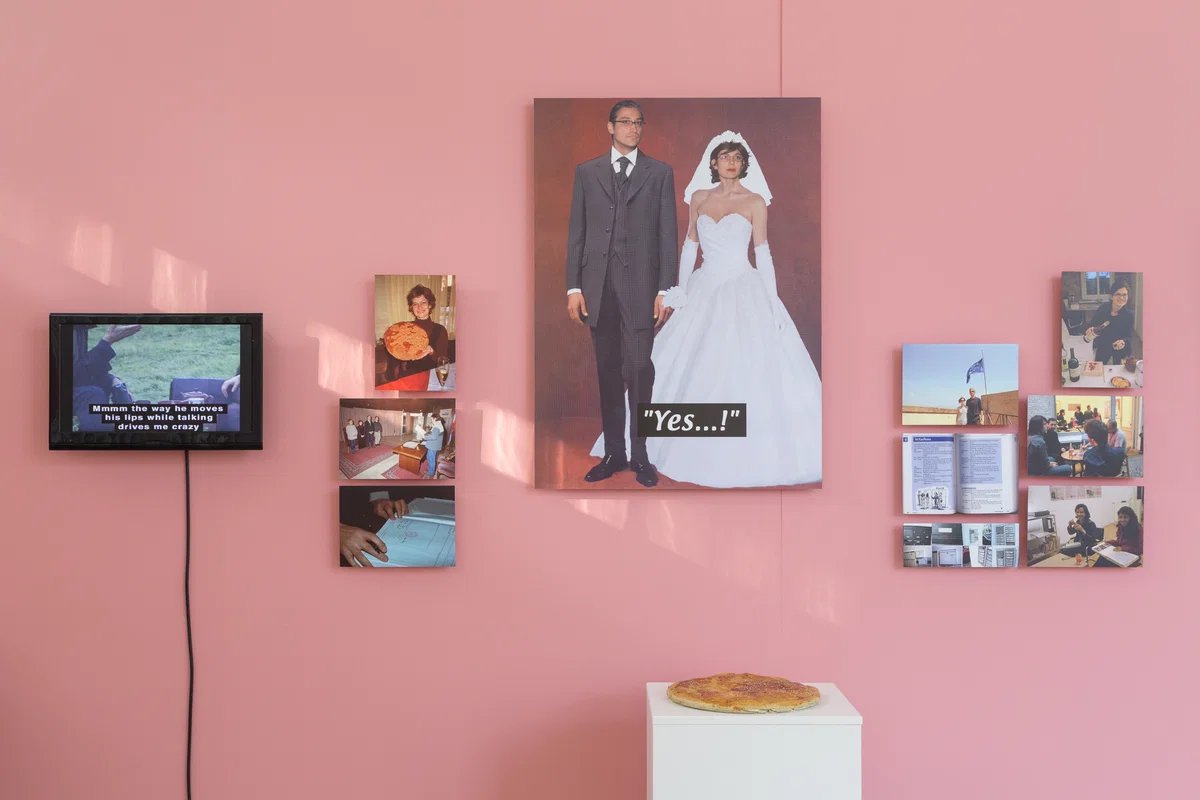
In the last 20 years, it has been much said and written about, already now, Ostojić’s historical art piece Looking for a Husband with EU Passport.
Last year, it was published in The Guardian in the list of the most important artworks of the 21st century. It has been presented in its complete form in the Museum of Yugoslavia in Belgrade, and somehow it is still alive. After so many years, the topic seems more relevant than ever, and some questions stayed the same. Still, they are giving different answers, connotations and understanding of the reality we are living in.
I met Tanja for the first time in Berlin a few weeks ago when she visited me and my colleague, Thomas Schäfer, in our office in Fotografiska Berlin. It was a great pleasure to hear your “own” language someone is speaking in a country that I just moved into. Even though we are generationally different, I immediately felt a connection and deep respect for Tanja’s authentic and complex art practice, which she developed as a series of strategic projects that span a period of several years, which allowed her to engage in a much more consistent and more profound analysis and development of the issues of concern of her work. Tanja Ostojić is born in former Yugoslavia in Serbia, and she lives and works in Germany. Her practice consists of art auctions, video and photo installations, documentary movies, round tables, and archives. Her brilliant and focused mind immediately put us in the position of the careful listener of the adventure she went through in her most intriguing work, which you can see presented as a portfolio form.
In her book Integration Impossible? The Politics of Migration in the Artwork of Tanja Ostojić, I had the opportunity to delve into almost 20 projects that the artist has realised between 2000–2008 in which the fundamental topic addressed is migration, a possibility to reformulate its representations of politics in the theory and activism. Ostojić is interested in the history of Europe and community building.
The participatory web project started in 2000 and finished five years later; Tanja published the ad with this title. She exchanged more than 500 letters with applicants around the world: the correspondence that followed presented in these pages shows different ways of approaching the artist. Messages from guys of different ages clearly show their interest or concern, even giving her advice on what to do or how to find real love. They are creative and short – usually accomplished with a photo suggesting the male body in surprisingly staged moments. I’m thinking here how is hard to imagine this pre-dating app that existed 20 years ago and how people communicated compared to today when in one second you can find someone to meet in the next one hour.
Letters were also coming from women, lesbians who were attracted to Ostojić’s bald head, a skinny shaved body without any note of sexuality or inviting gestures that could convey messages that entered the realm of diverse gender possibilities.
Here come many thoughts in our mind if we have a flashback into the new history of side effects of transitions such as trafficking in women, prostitution, pragmatic marriages etc. The power of body becomes the power of gendering. It’s interesting to see how far her ad went when we know how some participants respond artistically, trying to transform their bodies into a trans body agent. Her artwork becomes appropriative material for expressing the different notions of gender.
After the intense correspondence with the German man Klemens G., Ostojić arranged their first meeting in the field at the forefront of the Museum of Contemporary Art in Belgrade in 2001. They officially married in Belgrade later, and with a marriage certificate and all other documents, Ostojić was ready to apply for the visa. She moved to Düsseldorf, and there, her story in Germany begins. Of course, the wedding party was transformed into a Divorce party at the opening of her Integration Project Office installation at Gallery 35 in Berlin in 2005.
First published in Foam Magazine #62, M/Otherlands, Foam Fotografiemuseum Amsterdam, 2022, pages 215–224.